
Last updated: October 14, 2026
Prepare the fuel, service the oil and filters, apply the engine maker’s storage treatment, and drain and protect the cooling system as its manual specifies. Then service the gearcase or transmission, inspect and lubricate moving parts, prepare the boat for storage, and arrange battery care. Finish before freezing weather. The details depend on the engine: an outboard that drains vertically, a raw-water-cooled inboard and a closed-cooled sterndrive need different procedures.
This guide tells you to top off your tank with stabilized fuel before storage, so what you pay at the pump this fall matters. Gas is near record highs for the season, around $4.30 a gallon nationally against about $3.07 a year ago. Our forecast below shows the odds the national average drops under $4.00 by December 1.
Will US gas be under $4.00 on 1 December 2026?
Prediction liftPrediction drop
 Expert insights from Ramanan Krishnamoorti and Patrick De Haan
The war with Iran closed the Strait of Hormuz in March and the national average passed $4 in April, peaking at $4.56 in May. A June interim deal pulled it to $3.99, but the deal collapsed in July and expired in August, and prices set records for August and September, reaching $4.48. It has eased to about $4.30, yet Brent hit a five-month high near $108 this week and gasoline stocks are at a 12-year low. EIA expects the national average to fall below $4 in December, with high uncertainty. Traders on Kalshi put 95% odds on gas staying above $4 on 3 November. A fresh deal, or a federal gas tax holiday (stalled in Congress), would be the likeliest route to YES.
Resolves 1 December 2026 · Yes if AAA's national average price for a gallon of regular gasoline on 1 December 2026 is below $4.00 (AAA Gas Prices, gasprices.aaa.com); if AAA shows no figure for that day, EIA's weekly US regular gasoline retail price for 30 November 2026 decides.
Why the forecast moved 7 events, newest first, numbered as on the chart · forecast last updated 19 October 2026
| # | Date | Event and reasoning | Change | Source |
|---|---|---|---|---|
| 7 | 19 Oct 2026 | Brent near $108 after five-month high, supply intactBrent at a five-month high works against a drop in six weeks | -2.0 pts15.0% → 13.0% | Source |
| 6 | 6 Oct 2026 | EIA: 2026 gasoline avg $3.91; sees national average under $4 in DecemberEIA expects a sub-$4 December; the main upside, though with 'above-average uncertainty' | +4.0 pts14.0% → 18.0% | Source |
| 5 | 18 Aug 2026 | Oil jumps as US-Iran memorandum expires, Iran rejects new ceasefireMOU expired and Iran rejected a new ceasefire | -12.0 pts40.0% → 28.0% | Source |
| 4 | 8 Jul 2026 | Oil jumps after Trump says Iran deal is 'over'Deal declared over; the sub-$4 path closed again | -20.0 pts60.0% → 40.0% | Source |
| 3 | 14 Jun 2026 | Trump says interim deal reached to end Iran war, reopen HormuzInterim Iran deal showed a clear route to sub-$4 gas | +22.0 pts34.0% → 56.0% | Source |
| 2 | 21 May 2026 | Memorial Day gas at $4.56, a four-year high$4.56 shows prices can run far above the line | -14.0 pts48.0% → 34.0% | Source |
| 1 | 2 Mar 2026 | Iran strikes halt Hormuz tanker traffic, oil surgesHormuz shipping halted, the shock that put gasoline above $4 within a month | -40.0 pts96.0% → 56.0% | Source |
Expert commentary 5 quotes attached to the tracked events · each checked against its source
| Who | What they said | # | Source | |
|---|---|---|---|---|
| Ramanan Krishnamoorti LinkedIn ↗Professor of petroleum engineering; Vice President, Energy and Innovation, University of HoustonIndependent | “Any global challenge is likely to put significant upward pressure on gasoline prices in the U.S.” | 3 | abcnews.com |
| Patrick De Haan LinkedIn ↗Senior Petroleum Analyst, GasBuddyIndependent | “The real test now shifts to the Strait of Hormuz, where any reopening and resumption of normal oil flows would be the clearest signal that this relief is durable.” | 3 | spectrumlocalnews.com |
| Patrick De Haan LinkedIn ↗Petroleum Analyst, GasBuddyIndependent | “We may see a multi-week upward trajectory after oil's big jump yesterday, after new escalations in the strait between US and Iran,” | 4 | abcnews.com |
| Tom Kloza LinkedIn ↗Chief Energy Advisor, Gulf OilCompany | “I think U.S. gas prices will stay above $4 a gallon through the midterms, but I wouldn’t be surprised to see something on either side of $4 a gallon by year’s end,” | 6 | money.com | |
| Patrick De Haan LinkedIn ↗Head of Petroleum Analysis, GasBuddyIndependent | “Any escalation could push prices up and any de-escalation could push prices down,” | 6 | money.com |
Built using the most accurate forecasting models on Earth, by Authority.inc. Methodology audited by Oxford AI. Last updated 19 October 2026.
Boat Winterization Checklist
Use these 10 steps as your boat winterization checklist. Include additional water systems, battery arrangements and storage inspections, and record what must be restored before launch. The engine manual controls the actual procedure. Some preservation methods require a running engine, while others require it to be stopped. Arrange the final running operation so it does not undo a later storage treatment.
- 1. Prepare the fuel
- 2. Supply cooling water and service the fuel filter
- 3. Change the engine oil and filter
- 4. Apply the correct internal storage treatment
- 5. Drain the raw-water system
- 6. Complete the specified antifreeze protection
- 7. Service gear and transmission lubricants
- 8. Inspect, grease and protect
- 9. Set the storage position and drain other systems
- 10. Arrange battery care and record the work
Before starting: Work outdoors with exhaust directed away from people and buildings. Keep ignition sources away from fuel, and keep people clear of the propeller. For an enclosed gasoline engine compartment, follow its ventilation procedure, operate the blower for at least four minutes and check for fuel vapors before starting. The U.S. Coast Guard’s boating guide covers these starting precautions. Stop for any fuel leak or abnormal temperature alarm.
Step 1 Prepare the fuel
Add the correct marine storage additive to fresh fuel at the product’s storage dose. Measure the fuel volume you are treating; do not assume every stabilizer uses the same ratio. If fuel is contaminated, arrange proper removal rather than trying to correct it with extra additive.
Diesel owners should use their engine’s fuel-storage instructions and diesel-compatible products.
Fuel tank level: Follow the boat maker and storage facility’s requirements. Mercury’s gasoline-storage guidance makes this distinction:
| Gasoline tank | Storage approach |
|---|---|
| Older freely vented tank | Fresh stabilized fuel to about 95% full, leaving expansion space. |
| Newer sealed system | Filling solely to reduce moisture exposure is unnecessary; follow its instructions. |
Use the engine’s required octane and permitted ethanol content. Storage additive does not change which fuel the engine can accept. EPA guidance prohibits E15 use in boats.

Step 2 Supply cooling water and service the fuel filter
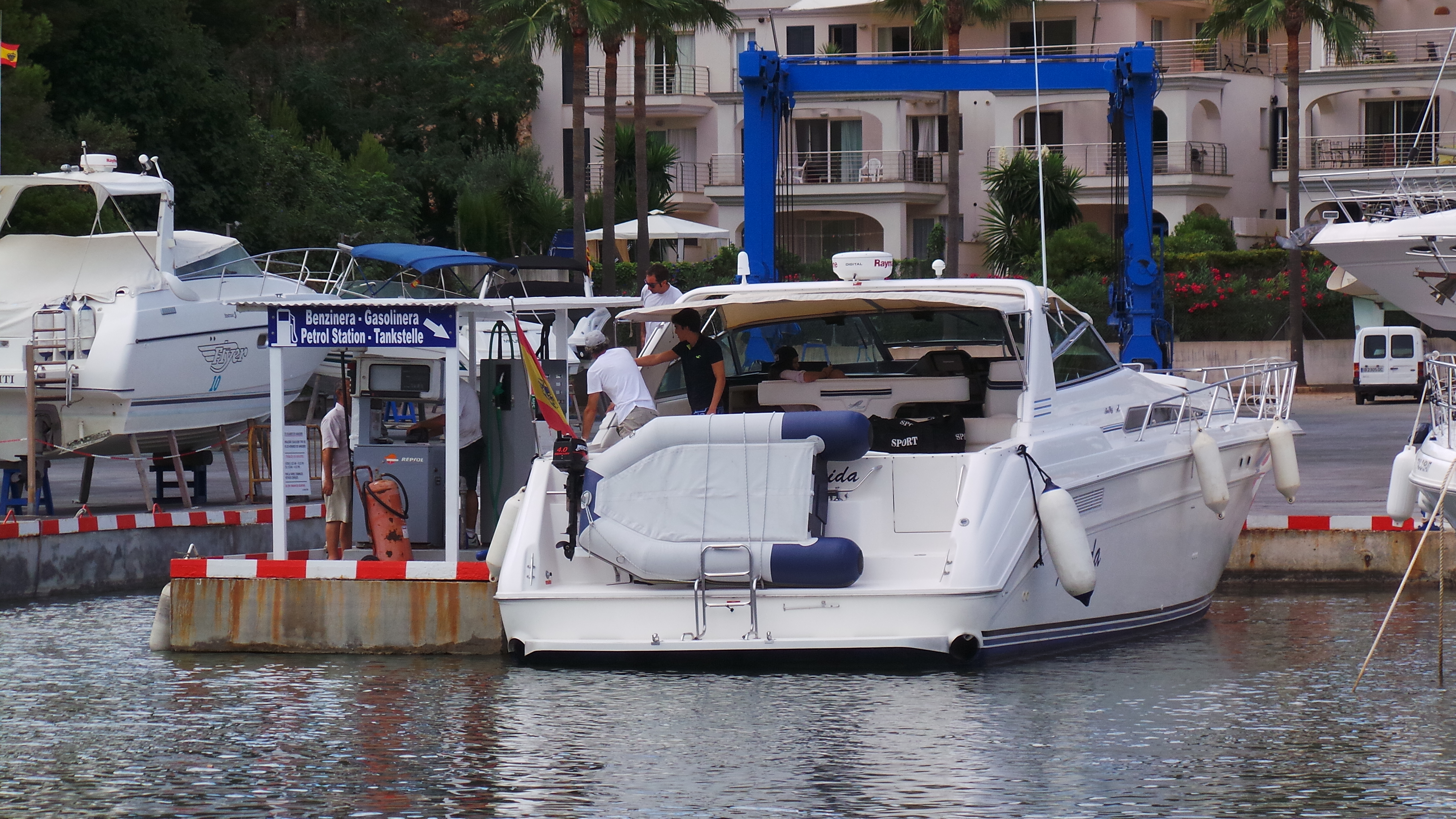
Use the water-supply arrangement approved for your engine. On an outboard, that might be correctly fitted flushing muffs or a suitable tank. A built-in hose port is not automatically suitable for running: Yamaha specifies engine-off flushing for its built-in device. Follow the specified water-on, engine-start and shutdown sequence, and do not rev an engine on muffs.
Run long enough for treated fuel to circulate, using the time and speed in the storage procedure. Shut down before servicing the water-separating filter or other fuel filters. Follow the replacement and priming instructions, contain spilled fuel, and check for leaks during a permitted restart before final preservation.
Step 3 Change the engine oil and filter
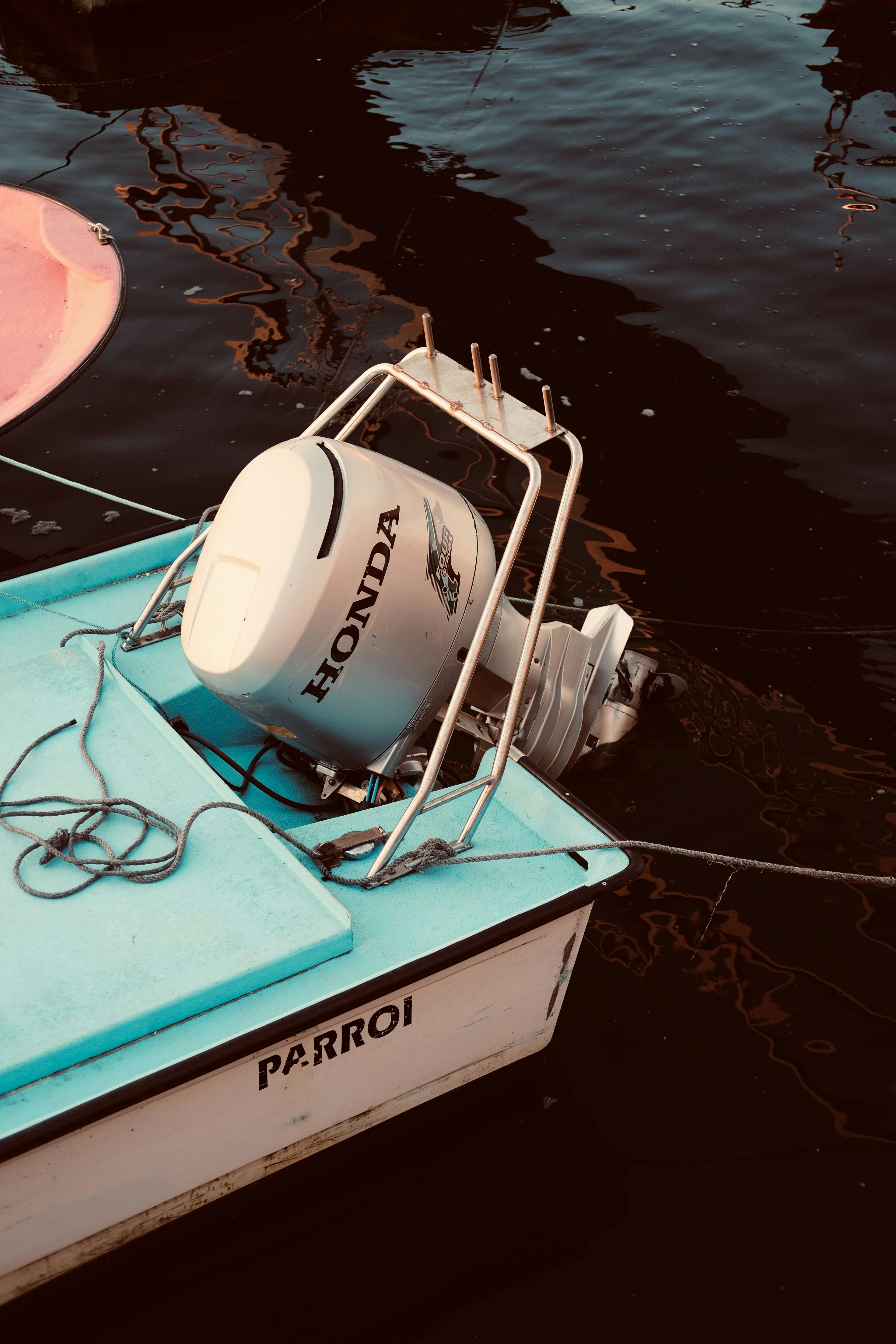
For a four-stroke outboard, inboard or sterndrive, warm the engine as directed, then stop it before draining or extracting oil. Use the specified oil, filter, seals and fill quantity. A conventional two-stroke does not have the same crankcase oil-change task.
Remove the old filter gasket, fit the new filter correctly and check the oil level by the maker’s method. If the procedure calls for a restart to circulate oil and check leaks, provide cooling water and do this before final draining and internal preservation. Mercury’s outboard storage guidance explains why fresh oil and a leak check belong in the layup routine.
Step 4 Apply the correct internal storage treatment
Apply the internal preservation treatment prescribed for your engine. Fogging is not one universal procedure. Carbureted, fuel-injected, direct-injected and catalyst-equipped engines can require different products and application routes. Some use oil through the spark-plug holes; others use a prescribed fuel mixture or an automatic storage mode.
For example, Yamaha’s four-cylinder procedure uses a specified mixture from a portable fuel tank. Indmar warns that running-engine fogging can damage the catalytic converters on the engines covered by its Raptor manual. Neither method should be generalized to every boat engine. Do not transfer gasoline fogging instructions to a marine diesel.
Step 5 Drain the raw-water system
With the engine stopped, follow the manual’s drainage sequence and position requirements. Outboards commonly self-drain when vertical. Inboards and sterndrives may have multiple drains and hoses, even when equipped with a centralized drain system.
Work through the diagram for your exact engine. Depending on the installation, check the block, exhaust manifolds, raw-water pump, heat exchanger, strainers, oil or transmission coolers, and heater connections. Confirm that each required drain actually flows; an opened fitting alone does not prove the passage is empty. Clear obstructions only as instructed, or have a technician investigate.
For boats afloat, closing the correct seacock may be necessary before disconnecting a below-waterline hose. Follow the boat’s procedure, control any opening to the sea, and tag the closed valve for spring. The YANMAR 6LY3 manual provides one model-specific example of seawater drainage and obstructed-drain checks.
Step 6 Complete the specified antifreeze protection
An antifreeze fill is required only where the engine’s procedure calls for it. For MerCruiser sterndrives, Mercury’s guidance calls for draining the seawater system before filling it with propylene glycol at the recommended protection level. Other manufacturers specify a different storage procedure.
Use the designated fill points and method. Simply drawing antifreeze through the intake is not a substitute for the specified drainage procedure, and colored liquid at the exhaust does not establish that every passage is protected. If filling requires a running engine, coordinate it with Step 4 so the final preservation sequence remains correct.
On a closed-cooled engine, test the retained coolant with a tester suitable for its chemistry and correct any deficiency to the engine specification. Protect the separate raw-water side too. Never open a hot pressurized coolant system. See the antifreeze table for product selection.
Step 7 Service gear and transmission lubricants
Inspect drained lubricant from the outboard lower unit or sterndrive. Milky oil, separated water or unusual metal debris calls for diagnosis before storage. Replacing the oil alone does not repair a leaking seal.
Refill with the specified lubricant, seals and procedure. Yamaha’s illustrated lower-unit procedure fills from the bottom until lubricant reaches the upper vent. Follow your own drive’s instructions for any reservoir or additional fill points. On an inboard, service the transmission and reduction gear according to their separate manuals and intervals.

Step 8 Inspect grease and protect
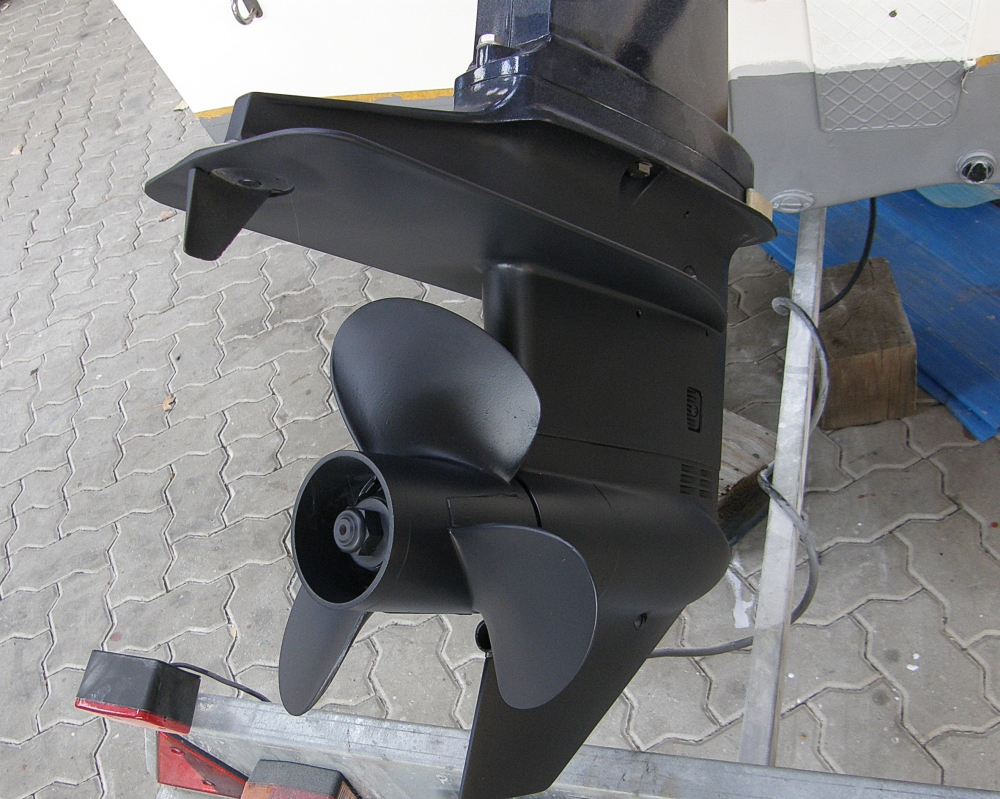
Disable starting before working near the propeller. Inspect it and the shaft for damage or fishing line, lubricate the specified points, and use the correct hardware and torque when reinstalling it. Inspect anodes, steering and trim components, hoses, belts and wiring. Apply corrosion protection only to surfaces approved by the engine and product instructions.
For sterndrives, include bellows, U-joints and gimbal-bearing service where applicable; drive removal is a sensible shop task when the required tools or experience are missing. Inspect or replace the raw-water impeller as scheduled. Remove it for storage only when the engine’s procedure calls for that, and record the need to reinstall it.
Step 9 Set the storage position and drain other systems
For dry storage, place the outboard in its specified draining position, commonly vertical. Lower a sterndrive as directed, with enough ground clearance and proper boat support. Mercury’s sterndrive winterization guidance warns that an elevated drive can collect water outdoors.
Work through the boat’s other water systems: freshwater plumbing, water heater, head, livewells, washdown, ballast, air conditioning and generator where fitted. Each needs its own procedure and compatible product. Turn off water-heater power and let it cool before draining or bypassing it. Keep boat drainage paths clear and record every plug or hose removed.
Step 10 Arrange battery care and record the work
Choose battery care around the battery chemistry and storage arrangement. For a boat stored ashore, disconnect or remove batteries as the boat and battery manufacturers direct, protect the terminals, and use the specified charging and storage routine. Trojan’s battery guidance explains the need for appropriate charging settings and ventilation. Do not apply flooded lead-acid maintenance instructions to sealed or lithium batteries; lithium storage and charging temperature limits are product-specific.
For a boat left afloat, preserve reliable power to automatic bilge pumps and any essential monitoring equipment, as emphasized in Lowe’s winterizing checklist. Do not remove the battery or turn off its supply without an appropriate alternative. Check the pump’s actual wiring rather than assuming the battery switch leaves it active.
Finish the layup record, label the ignition controls with any “do not start” conditions, and list the tasks required before launching. That record should identify closed seacocks, removed impellers, drain plugs, disconnected hoses and the final cooling-system condition.
Why Winterizing Your Boat Engine Matters
Winterization protects the cooling system from freeze damage and helps limit corrosion and fuel deterioration during storage. Oil service, internal preservation and battery care still matter in climates where freezing is uncommon.
Schedule winterization when your boating season ends, with time to fix problems before a freeze. Finish before freezing weather is expected; do not wait for a 28°F “hard freeze.”
Use NOAA’s first-fall-freeze maps for planning, then follow the local forecast. A median date means the first freeze has already happened by that date in roughly half the years. Elevation, distance from the coast and local terrain matter more than a broad regional label.
| Storage situation | Planning priority |
|---|---|
| Cold winters or high elevation | Book service early enough to finish before the first plausible freeze. |
| Mild climate with occasional freezes | Prepare before cold weather arrives; a warm seasonal outlook cannot rule out a damaging night. |
| Long layup without freezing weather | Follow the maker’s storage guidance for fuel, corrosion, lubrication and batteries. |
| Boat used through winter | Plan how to drain and protect it between uses whenever freezing conditions are possible. |
A cover or heater does not replace the specified cooling-system protection.
Water left in an engine can begin to freeze when it cools to 32°F (0°C). The National Weather Service distinguishes freezing conditions at 32°F from a hard freeze at 28°F; neither threshold establishes a safe exposure time for your engine. Protect the cooling system before a freeze is expected.
Essential Tools and Supplies for Winterization
Buy parts against the engine serial number and storage procedure. Separate engine coolant from antifreeze intended for drinking-water plumbing, even if both containers say “marine.”
| Category | Supplies to confirm | Used in |
|---|---|---|
| Fuel | Correct storage additive, specified filters and seals | Steps 1–2 |
| Lubricants | Engine oil, oil filter, approved storage oil, gear or transmission lubricant, grease | Steps 3–4 and 7–8 |
| Cooling | Approved flushing equipment, drain tools, specified antifreeze or coolant, compatible tester | Steps 2 and 5–6 |
| Tools and containment | Hand tools, torque wrench, filter wrench, oil extractor if required, drain pans, absorbent pads, labeled waste containers | Throughout |
| Storage | Corrosion protection, labels, ventilated cover, battery equipment matched to its chemistry | Steps 8–10 |
DIY or professional service
Price depends on the engine, access, fluid capacities and what the service includes. Get an itemized local quote using the engine model and number of engines. A basic engine layup and a package with drive removal, plumbing, hauling, covering and storage are different jobs.
| Quote item | What to confirm |
|---|---|
| Engine service | Is the price per engine, and are oil, filters, lubricant and antifreeze included? |
| Cooling protection | Does it cover all fitted coolers, heater loops and the drive? |
| Drive inspection | Are drive removal, bellows inspection and related labor included or separate? |
| Other water systems | Are head, freshwater, ballast, generator and air conditioning listed individually? |
| Storage package | Are hauling, blocking, cover, battery care, inspections and spring commissioning included? |
DIY is most practical when you can identify every required service point and carry out the exact procedure. Use a qualified marine technician when access is difficult, draining is uncertain, or the engine needs diagnosis. Save receipts and the completed checklist so you know what was done and what remains for spring.
How to Winterize an Outboard Motor
Outboards still need winterization even when their cooling passages drain by gravity. Prepare the fuel, service applicable oil and filters, inspect the lower unit and propeller, and apply the prescribed internal storage treatment. Flush, drain and store the motor as directed. Check whether its flushing port permits engine operation; do not assume the port and flushing muffs are interchangeable.
Use the 10-step checklist with your motor’s storage instructions. A four-stroke needs its specified crankcase oil and filter service; a conventional two-stroke does not have the same oil-change task. Complete any running procedures before final preservation, then leave the motor in the draining position specified by its manufacturer.
How to Winterize an Inboard Boat Engine
For inboards, identify the cooling system and every raw-water service point before starting. Include connected coolers and heaters in the draining and preservation procedure. Closed cooling still requires attention to the raw-water side. Service the transmission separately according to its manual.
Drive type and cooling type are separate questions. A sterndrive has an engine inside the boat and a drive outside the transom; an inboard drives a shaft through the hull. Either engine may have raw-water or closed cooling.
| Task | Outboard | Inboard | Sterndrive |
|---|---|---|---|
| Engine oil | Four-stroke crankcase oil and filter where fitted | Oil and filter specified for engine | Oil and filter specified for engine |
| Internal protection | Model-specific storage treatment | Gasoline or diesel procedure; check catalyst restrictions | Model-specific procedure; check catalyst restrictions |
| Cooling system | Flush and drain in specified position | Drain all listed raw-water components; protect as directed | Protect engine, raw-water circuit and drive as directed |
| Drivetrain | Lower-unit gear lubricant | Transmission and any separate reduction gear | Drive lubricant and any reservoir procedure |
| Storage position | Usually vertical for self-draining | Follow boat’s support and drainage instructions | Drive down for outdoor storage where specified |
Raw-water cooling circulates lake or seawater through engine cooling passages. Closed cooling uses a separate coolant circuit, but still has a raw-water side to winterize. That side may include the heat exchanger, exhaust, pump and coolers. The Indmar Raptor manual illustrates why “closed cooling” does not mean the whole engine is protected by its coolant reservoir.
Boat Engine Antifreeze: Selection and Application
For antifreeze and coolant, match the product to the circuit. Follow the engine’s drain-and-fill procedure and check the label’s approved application, chemistry and protection rating. Color is not a reliable specification.
| System | Product to select | Main check |
|---|---|---|
| Raw-water engine circuit, when an antifreeze fill is specified | Engine-approved winterizing antifreeze with appropriate corrosion protection | Correct drain/fill method and protection at the lowest expected temperature |
| Closed engine coolant circuit | Exact manufacturer-specified coolant and concentration | Compatible chemistry, tested protection and service interval |
| Potable-water plumbing | Product explicitly labeled for potable-water-system winterization | Follow plumbing and product directions; never use engine coolant |
Read both freeze protection and burst protection. They describe different performance: the large negative number on a container may be a burst rating. Mercury’s −100°F product, for example, lists freeze protection at approximately −58°F to −63°F. Follow the dilution instructions; residual water can reduce protection. Collect used fluids and dispose of them through an appropriate local waste service.
Leave winterizing antifreeze in place until recommissioning when the engine’s storage procedure calls for a filled system. For example, Mercury’s MerCruiser guidance specifies draining the seawater system and then filling it with the prescribed antifreeze for storage. Closed-loop engine coolant also stays in place where the manual directs. Some engines instead specify draining the raw-water side, and self-draining outboards generally follow a different procedure. Collect discharged antifreeze during spring servicing.
Common Winterization Mistakes to Avoid
Watch for skipped drains, blocked drain openings, the wrong flushing setup, unsuitable or diluted antifreeze, a fogging method copied from another engine, and running the engine after its final preservation. For afloat storage, also check that battery changes have not disabled essential bilge-pump power.
The final check should verify the actual condition of each system: required drains are clear, the correct fluids are in place, and removed parts or closed valves are recorded for spring. If any part of the procedure is uncertain, resolve it before leaving the boat in freezing conditions.
Post-Winterization Storage and Spring Recommissioning
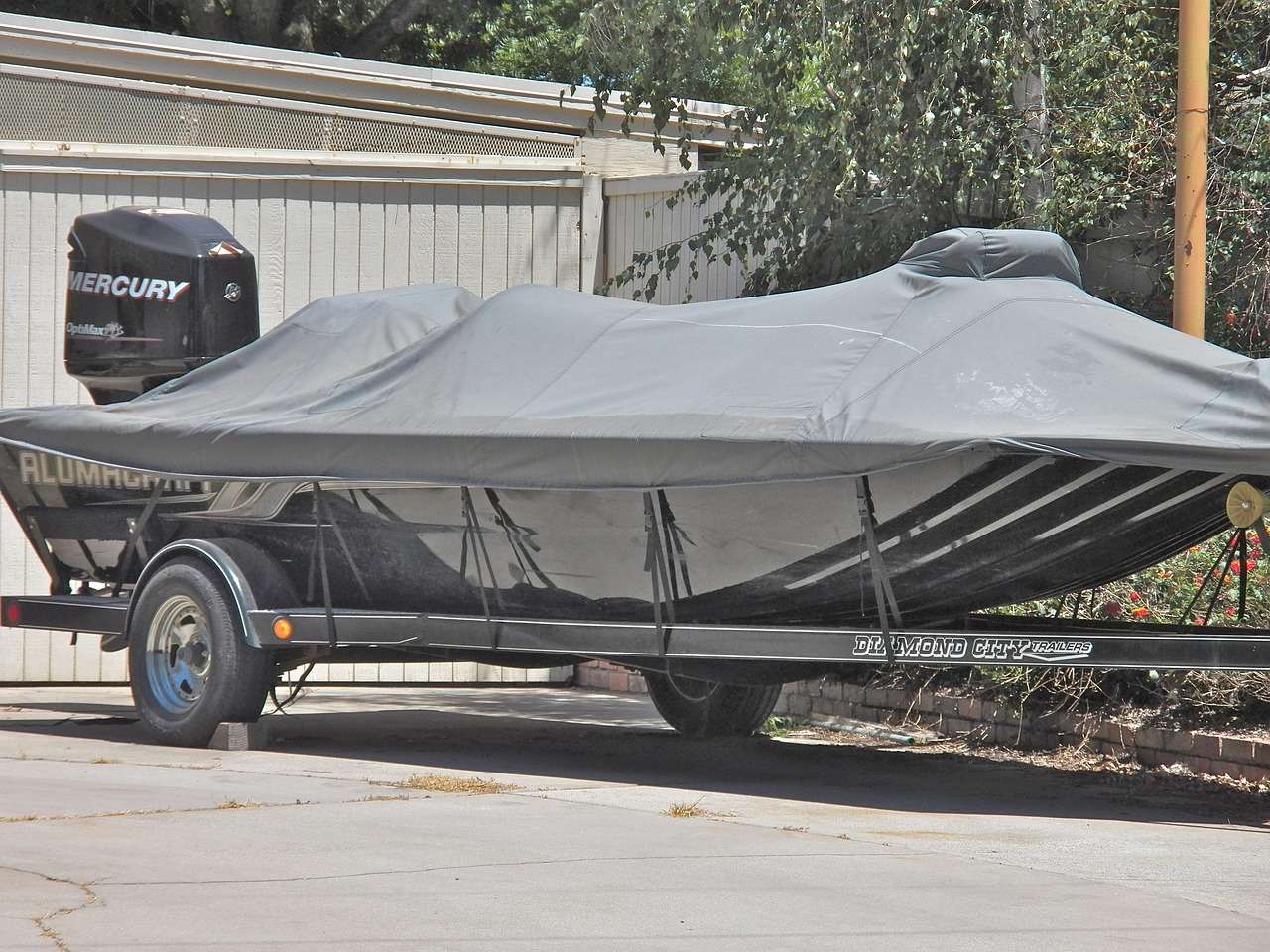
Use a secure, ventilated cover and the boat maker’s support arrangement. Inspect the boat periodically and after storms for pooled water, blocked drains, cover damage and battery or bilge-pump problems. For afloat storage, agree on seacock positions, essential electrical loads and inspection responsibility with the yard; do not indiscriminately close drains or plug exhaust outlets.
Before the first spring start:
- Work through the layup record and the engine’s return-to-service instructions.
- Reinstall removed impellers, drain plugs, hoses and required seals; check clamps and connections.
- Inspect fuel lines, belts, bellows and wiring, and check oil, gear lubricant and coolant levels.
- Restore batteries and electrical connections according to their instructions.
- Remove storage covers or plugs from air intakes and exhausts, where fitted.
- Install the hull drain plug before launch and restore the required cooling-water path, including the intake seacock where applicable.
- Start only with the prescribed cooling-water supply and ventilation. Check cooling operation, alarms, temperature and leaks.
- After launch, inspect below-waterline connections and confirm bilge-pump operation before leaving the boat unattended.
Frequently Asked Questions
How do you winterize a marine diesel engine?
Use the diesel’s storage procedure for oil service, fuel-system care, seawater drainage and internal preservation. Test and retain the specified closed-loop coolant where directed. For example, the YANMAR 6LY3 manual instructs owners to drain seawater while retaining engine coolant. Do not apply gasoline-engine fogging methods by default.
Can you use the boat after winterizing the engine?
Before starting, follow the engine’s return-to-service instructions and restore any removed components, disconnected hoses and required cooling-water paths. After use, repeat the storage procedures affected by running the engine, including any drainage, antifreeze protection and internal preservation required by its manual. A previous winterization does not automatically protect an engine that has since been used.